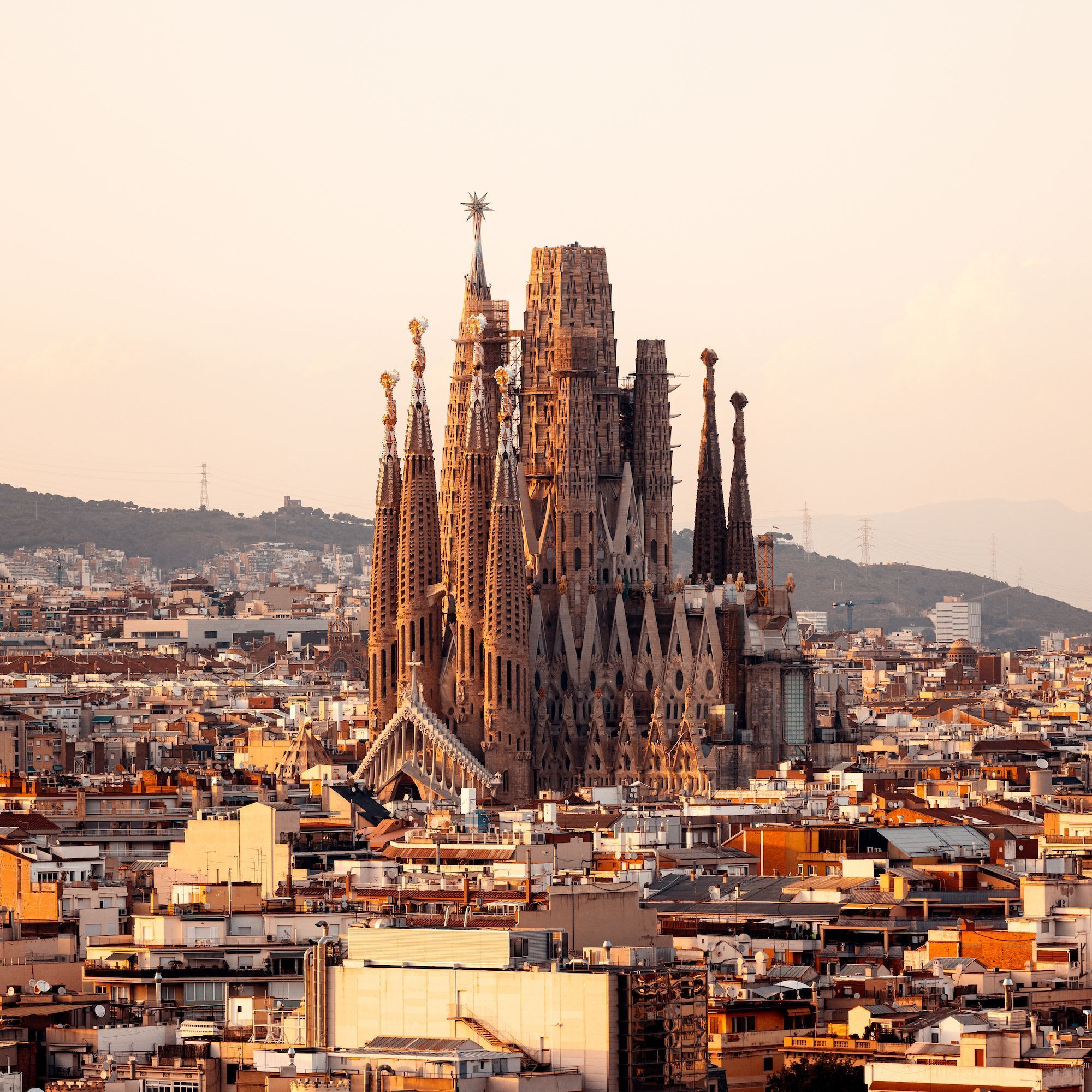
Rising above the skyline of Barcelona, the Sagrada Família stands as one of the most extraordinary architectural achievements in human history. More than a cathedral, it is a testament to imagination, faith, perseverance, and the enduring genius of Antoni Gaudí, whose visionary designs transformed architecture forever.
For over a century, this magnificent basilica has captivated visitors with its soaring towers, intricate facades, and breathtaking fusion of nature, spirituality, and art. Today, as construction nears completion, the Sagrada Família continues to inspire millions from around the world and remains the most recognizable symbol of Barcelona.
The Vision of Antoni Gaudí
When Gaudí assumed responsibility for the project in 1883, he transformed what had been conceived as a traditional Gothic church into something entirely revolutionary. Drawing inspiration from the natural world, he envisioned a structure where architecture would imitate creation itself.
Unlike conventional cathedrals defined by straight lines and rigid geometry, Gaudí’s design embraces flowing curves, branching columns, spiraling towers, and organic forms reminiscent of forests, mountains, flowers, and honeycombs. He famously stated that “the great book, always open and which we should make an effort to read, is that of Nature.”
This philosophy is visible throughout every aspect of the basilica.
Architecture Inspired by Nature
One of the most remarkable experiences inside the Sagrada Família is entering its vast nave. Instead of traditional stone columns, visitors encounter towering pillars that branch outward like giant trees supporting a forest canopy. Sunlight streams through vibrant stained-glass windows, bathing the interior in shifting shades of blue, green, gold, and crimson.
The result is an atmosphere unlike any other cathedral in the world—a sacred space that feels alive, organic, and constantly changing with the movement of the sun.
Outside, the facades tell the story of Christ through an astonishing level of sculptural detail. Every surface is filled with symbolism, biblical imagery, and natural motifs, reflecting Gaudí’s belief that faith and nature were inseparable manifestations of divine creation.
A Cathedral More Than 140 Years in the Making
Construction began in 1882, and the Sagrada Família quickly became one of the most ambitious architectural projects ever undertaken.
Gaudí devoted the final decades of his life almost exclusively to the basilica. By the time of his death in 1926, less than a quarter of the project had been completed. Nevertheless, he remained confident that future generations would continue his work, famously remarking:
“My client is not in a hurry.”
That “client,” of course, was God.
Despite wars, political upheavals, financial challenges, and technological limitations, architects and artisans have continued building according to Gaudí’s vision for more than a century.
The Completion of a Dream
Advances in digital modeling, engineering, and stone fabrication have accelerated construction in recent decades, allowing craftsmen to realize designs that Gaudí could only imagine with the tools available during his lifetime.
The anticipated completion of the central towers marks a historic milestone—not only for Barcelona but for the entire architectural world. While finishing touches and decorative elements may continue, the project is finally approaching the realization of Gaudí’s original dream.
The completion of the Sagrada Família represents a rare moment in history: the fulfillment of a vision passed through multiple generations of architects, artists, engineers, and artisans over nearly a century and a half.
A UNESCO World Heritage Treasure
Several of Gaudí’s works have been recognized as UNESCO World Heritage Sites, celebrated for their exceptional contribution to architecture and culture. His influence extends far beyond Spain, inspiring designers, artists, and architects across the globe.
Today, the Sagrada Família attracts millions of visitors each year who come to witness one of humanity’s most extraordinary creative achievements—a building that transcends traditional architectural categories and exists somewhere between sculpture, engineering, nature, and faith.
The Legacy of Gaudí
More than a church, the Sagrada Família embodies the power of imagination and the belief that great works of art can outlive their creators. It reminds us that beauty is often the result of patience, dedication, and a willingness to pursue a vision beyond one’s own lifetime.
Gaudí never lived to see his masterpiece completed, yet his spirit is present in every curve, tower, and mosaic that rises above Barcelona today.
As the final chapters of construction unfold, the Sagrada Família remains what it has always been: a monument to creativity, devotion, and the limitless possibilities of human artistry.
Did You Know?
- Construction of the Sagrada Família began in 1882.
- Antoni Gaudí dedicated the last 43 years of his life to the project.
- The basilica’s design incorporates extensive natural symbolism, including trees, flowers, shells, and geometric forms found in nature.
- The tallest central tower, dedicated to Jesus Christ, will make the Sagrada Família one of the tallest church structures in the world.
- The basilica remains one of the most visited landmarks in Spain and one of the most iconic architectural works ever created.
The Sagrada Família is more than a destination—it is a living masterpiece, where architecture, faith, and nature unite in one of the greatest artistic achievements of all time.